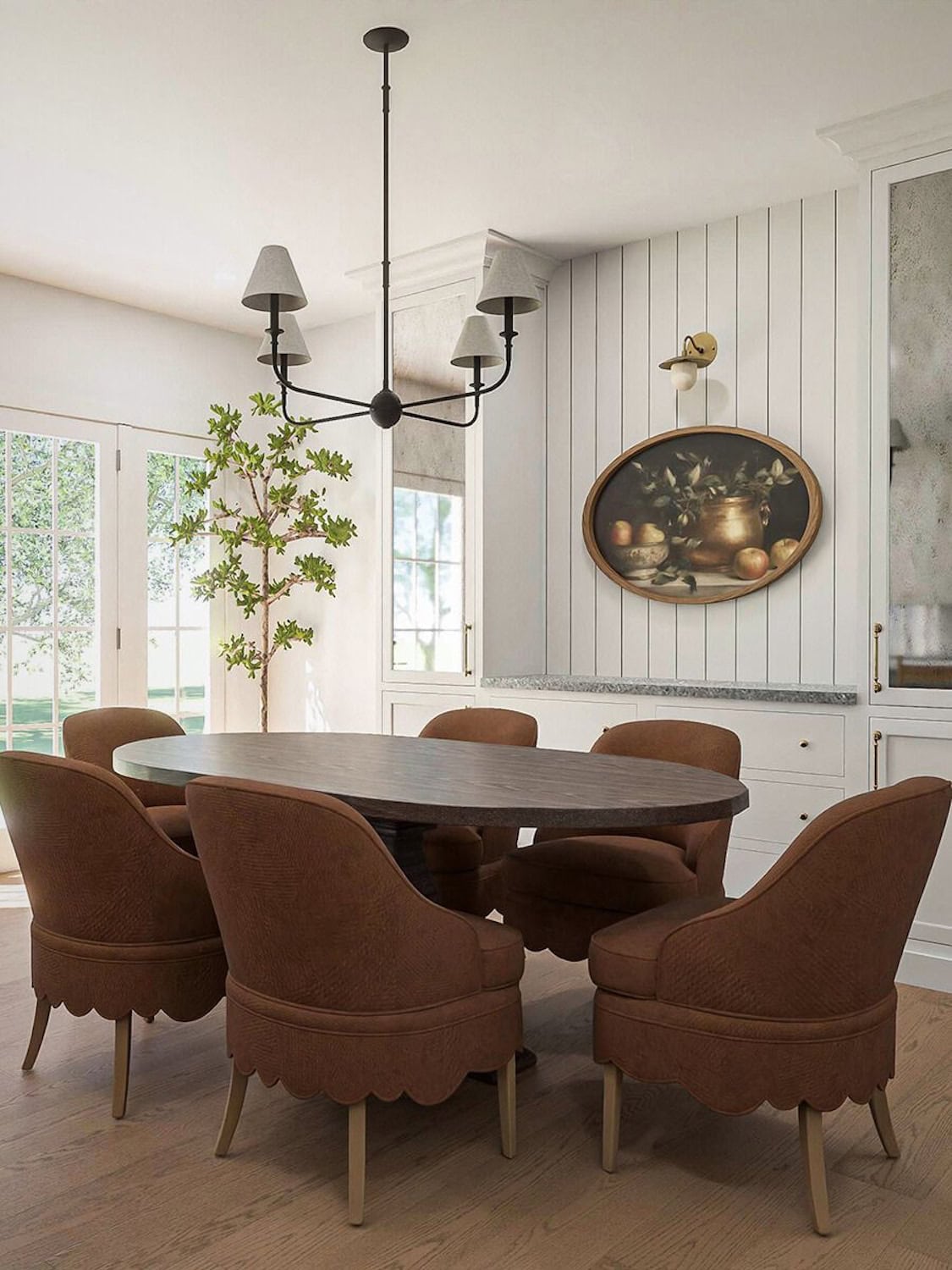
Today, we are sharing a first look at the Orchard Drive dining room. After refining the floor plan and introducing a custom-built-in dining hutch to anchor the space, we’re letting you in on how materials, furnishings, and light will work together to shape this room’s experience.
Creating an Anchor Within an Open Plan
Open-concept homes often benefit from moments of definition. While the kitchen establishes structure through cabinetry, the dining room needed its own sense of presence without interrupting the visual flow from the foyer through the exterior doors and beyond.
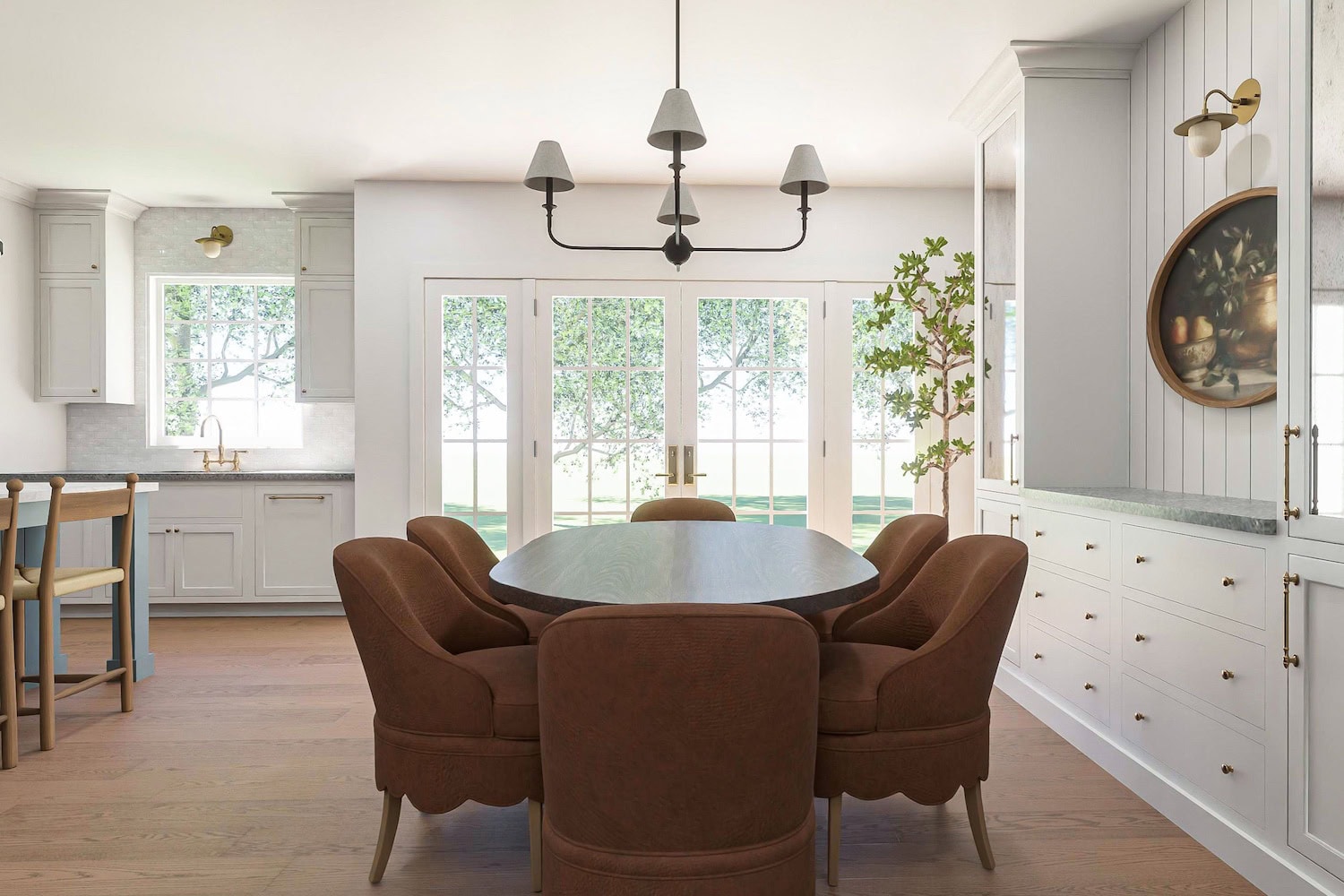
Our goal was to create an intentional stopping point along this sightline that grounds the space while allowing views and natural light to remain uninterrupted. From the foyer, your eye travels toward the dining table framed by the French doors and windows. This strong visual offers a layered perspective that reinforces the connection between indoors and out.
A Palette Built on Continuity
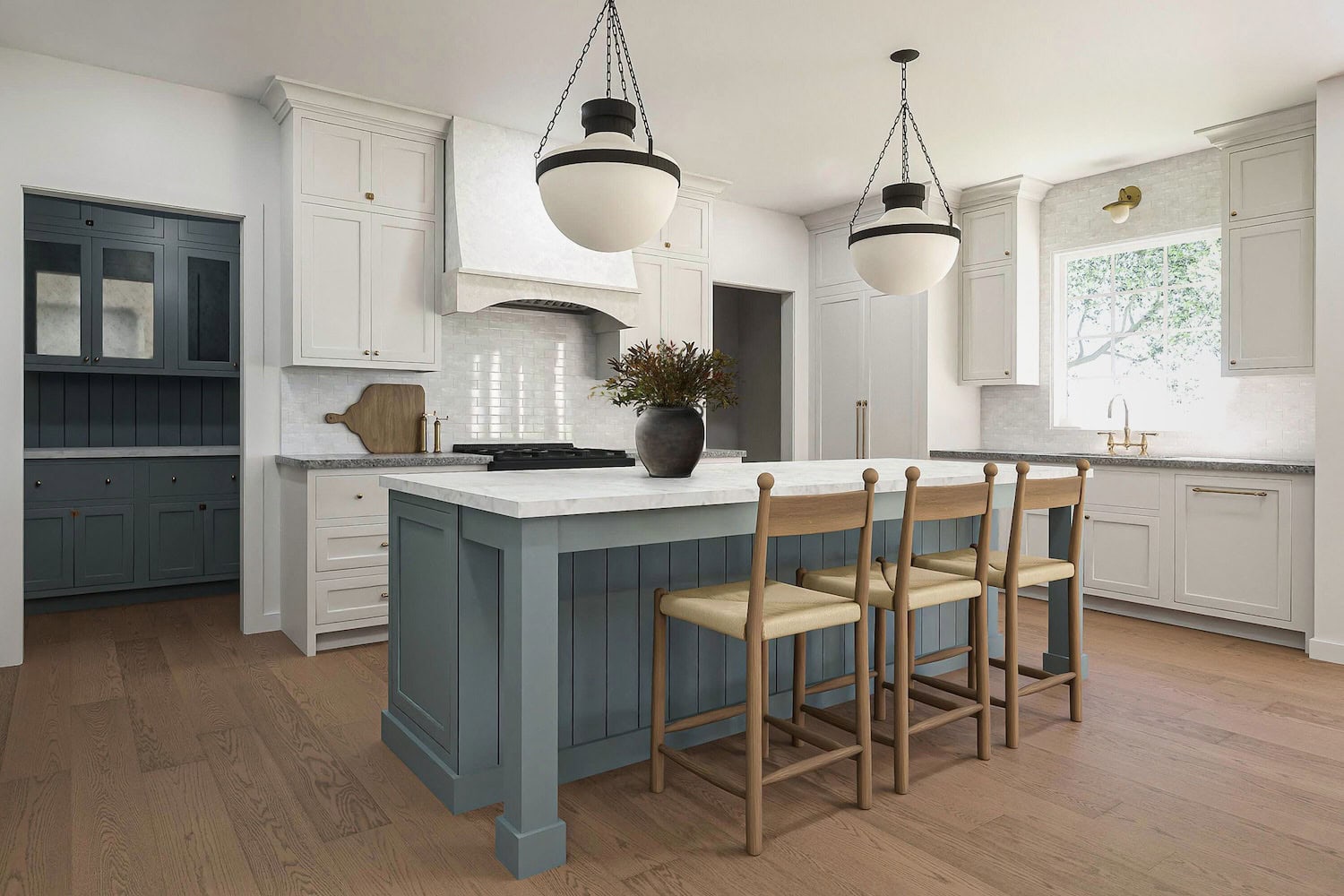
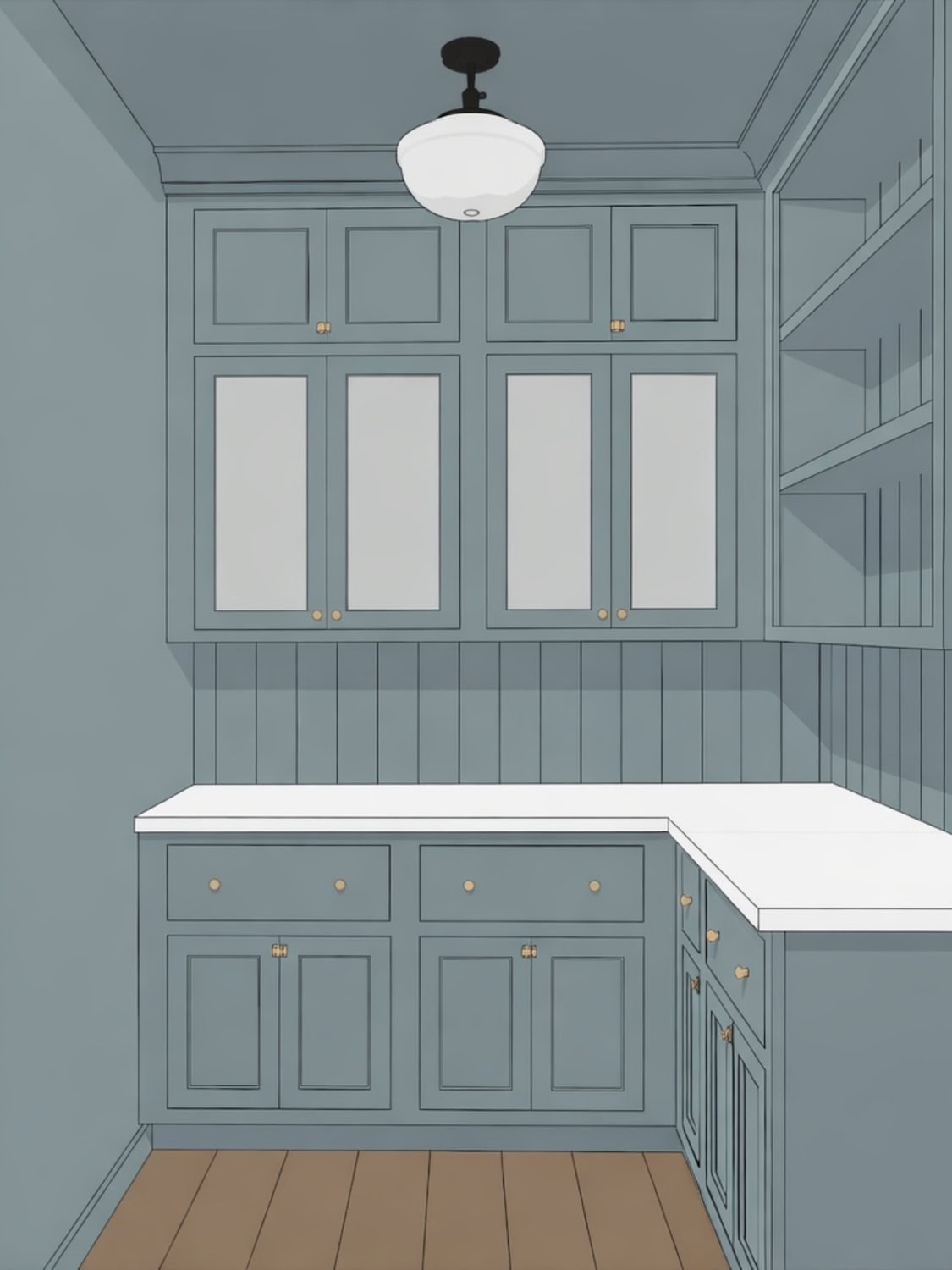
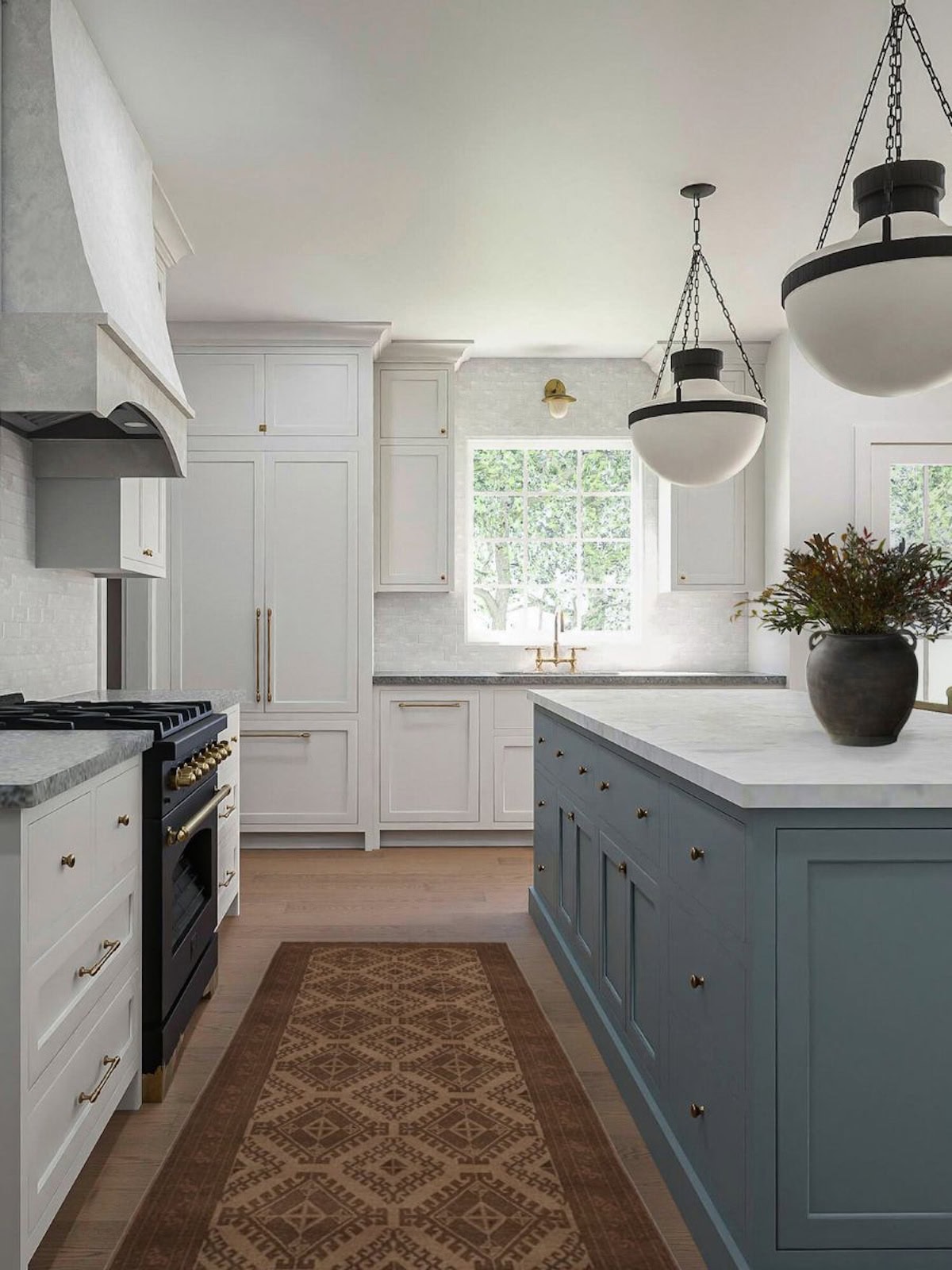
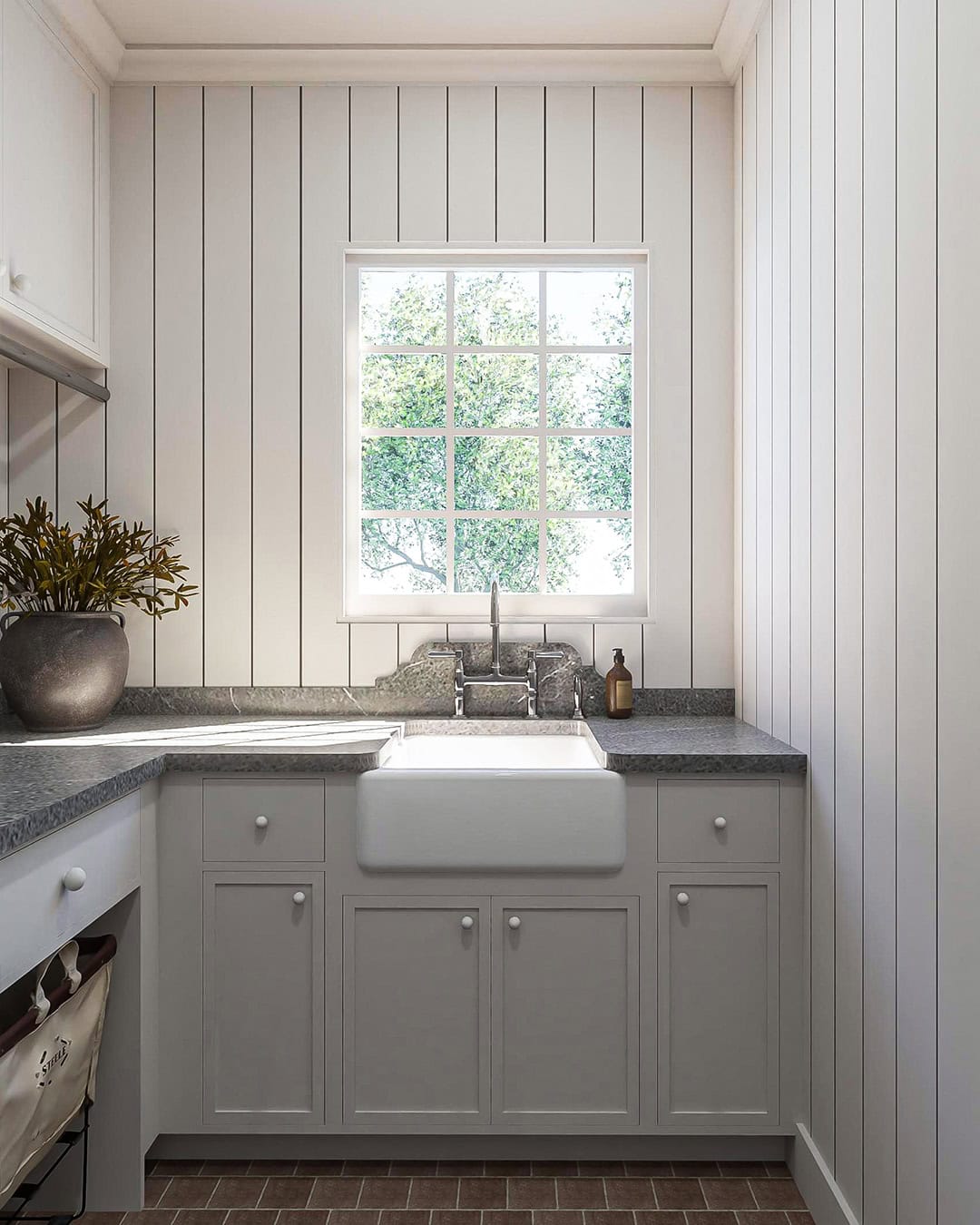
Material selections were intentionally carried over from adjacent spaces to maintain cohesion throughout the home, with the walls and cabinetry finished in the same hues as the kitchen and laundry room. This small detail allows the dining room to feel like a natural extension of the larger design story.
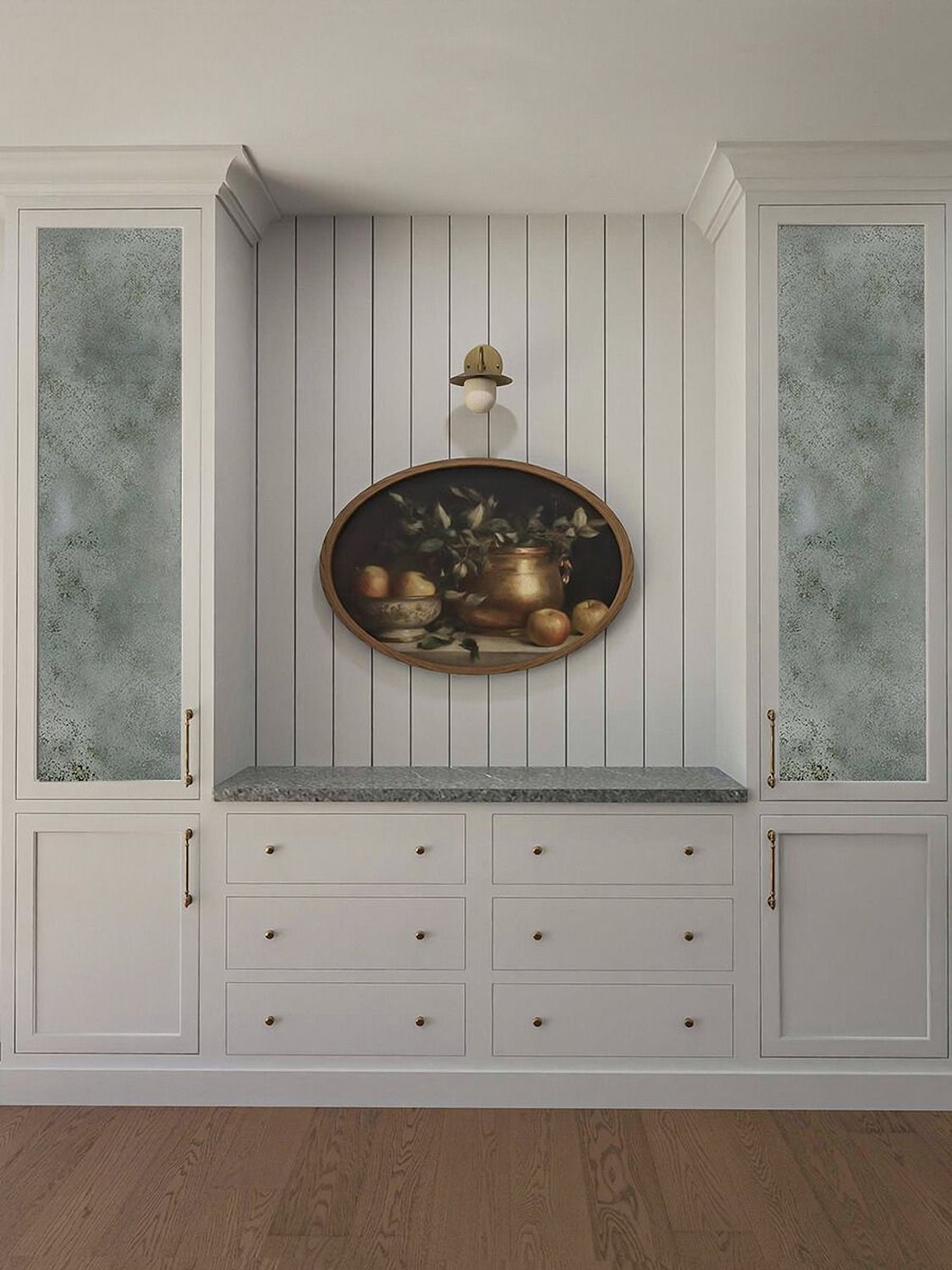
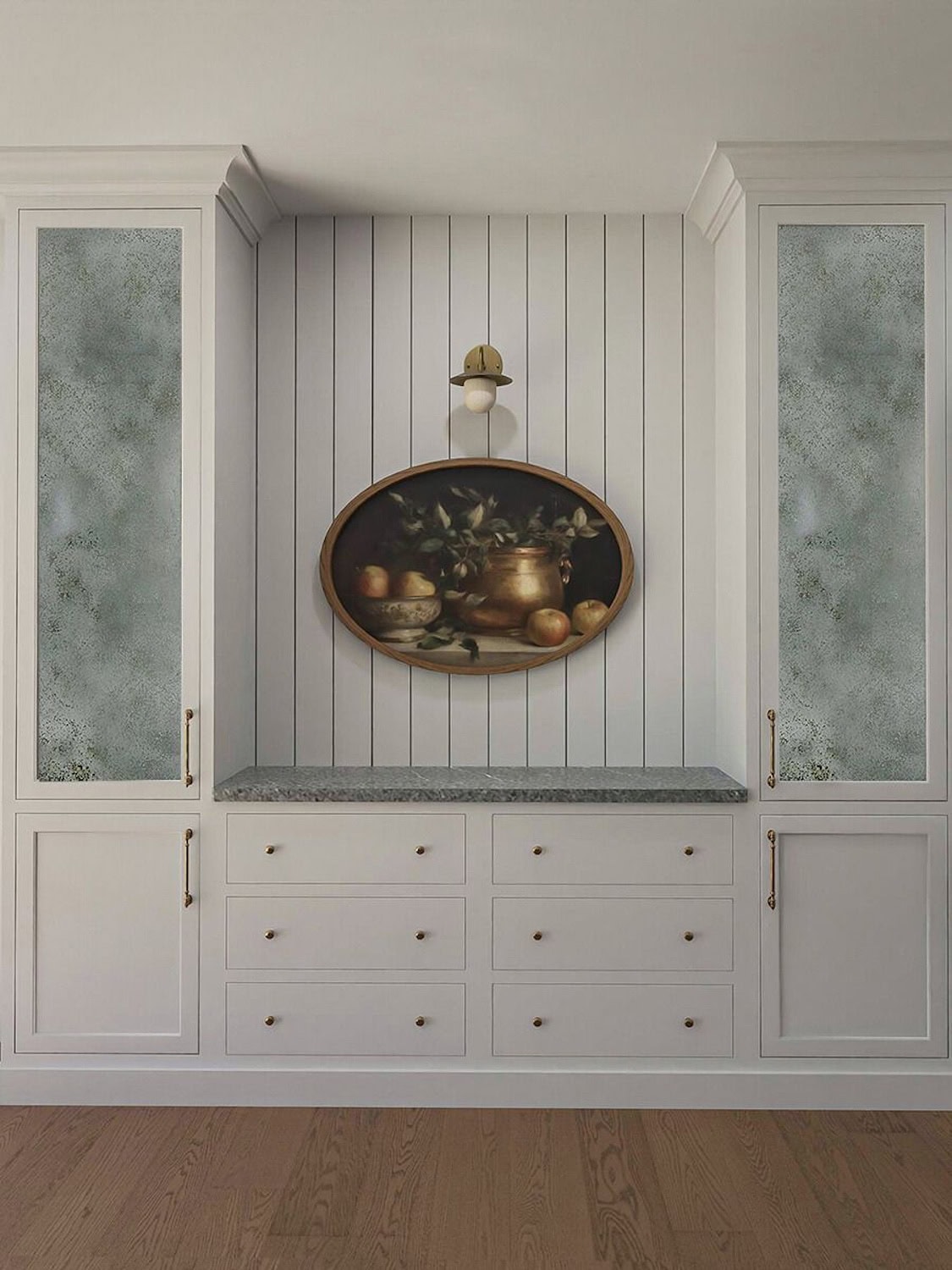
The item we are most excited about in this space is the custom dining hutch. We wanted something that visually tied back to the kitchen and would establish an anchor to give the dining room architectural weight, proportion, and intimacy.
Soapstone was selected again for the hutch countertop, which visually ties the built-in back to the kitchen. To distinguish the cabinetry as a furniture-like element, warm antiqued mirror panels were introduced in the upper doors. These reflective surfaces will catch light and help the piece feel lighter despite its full-height scale. Unlacquered antique brass hardware adds warmth and continues the living finishes used throughout the kitchen.
Dining Room Materials: Balancing Structure with Softness
Because the surrounding architecture and cabinetry introduce strong linear forms, the selected furnishings need to soften the overall composition.
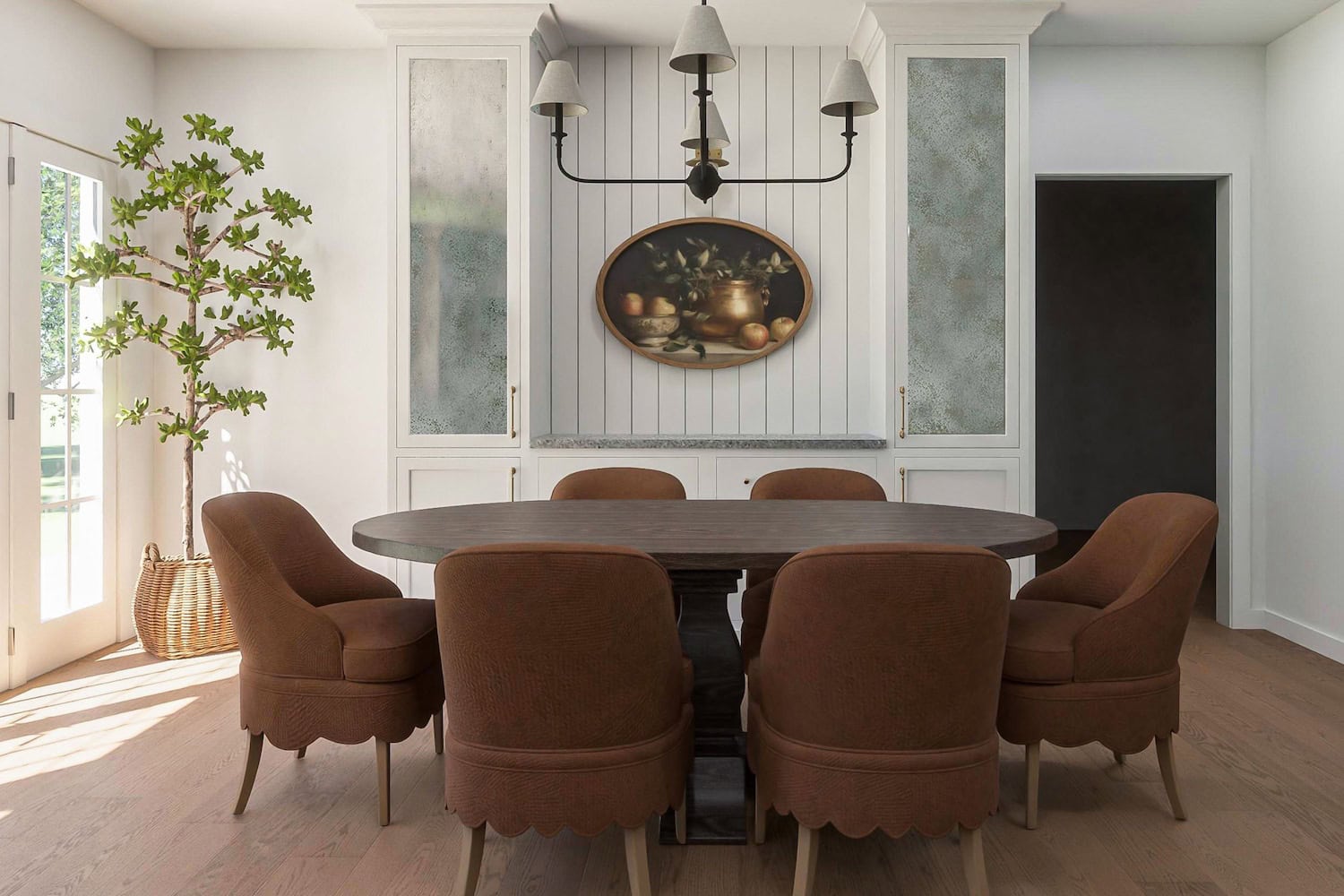
An oval dining table in a deep chestnut-stained oak replaces the originally proposed round table. Extending the table lengthwise allows the room to better utilize its generous proportions while widening circulation paths around it. The darker tone also introduces depth and balances the moodier palette visible in the adjacent pantry. Our clients wanted a durable table, and this solid wood was the way to go.
Dining chairs upholstered in a rusty-brown velvet fabric introduce an extra layer of warmth and softness. Rounded backs and scalloped edges provide a counterpoint to the harder lines and add a feminine layer to the space. Rather than introducing drapery, we intentionally kept sightlines open so the exterior views remain a central feature of the room.
Dining Room Materials: Natural & Ambient Light
Natural light plays a significant role in the way this dining room is experienced. As daylight moves through the French doors, it will reflect off the antiqued mirror panels to brighten the space and add visual depth.
For continuity, the same sconces used in the kitchen appear on the built-in, which strengthens the visual connections between rooms. Above the table, a simple, shaded chandelier in an aged-iron finish echoes the kitchen pendants. This selection of material reinforces cohesion without competing for attention.
Together, these lighting choices allow the dining room to feel distinct yet unmistakably connected to the surrounding spaces.
When the Design Comes Together
What once read as an oversized, undefined area now feels purposeful and grounded. The addition of the built-in cabinetry, layered materials, and carefully scaled furnishings transforms the dining room into a space that balances openness with intimacy.
Tonal layering remains central to the design, though this room introduces slightly stronger contrast through darker wood tones and patterned upholstery. These moments of depth help the dining room hold its own within the open-concept layout while still contributing to the home’s calm and cohesive atmosphere.

About Mabel Lane
Mabel Lane is a residential design studio built on a foundation of livability and comfort. Grounded in a modern heritage sensibility, our work specializes in custom new-builds, renovations, and furnishings designed to feel quietly refined and deeply connected to everyday life.
Resources
Notes on Home
A weekly letter from our studio sharing reflections and design lessons on how to cultivate a home grounded in permanence, character, and warmth.