In open-concept homes where kitchens connect to other frequently used spaces, efficiency comes from identifying the repeated paths we take while cooking, prepping, and gathering. Picture a typical morning: someone moves from the refrigerator to the sink to rinse berries, then over to the counter to slice them. At the same time, another person weaves between the island and the stove to make coffee and scramble eggs. These intertwined movements show how even the simplest tasks depend on clear circulation to reduce friction points in daily routines.
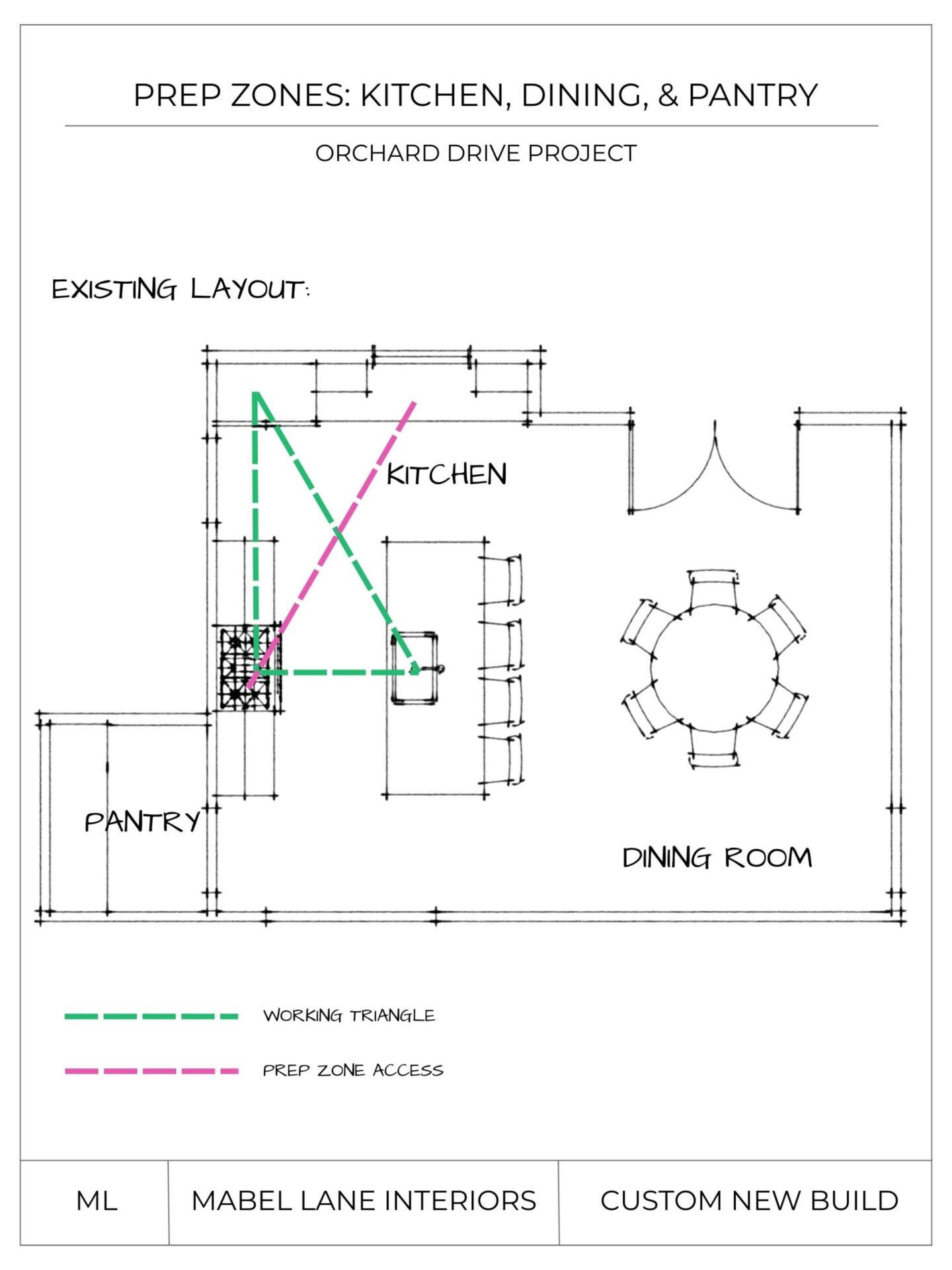
Looking at the kitchen layout for this home, the working triangle between the refrigerator, sink, and stove looks efficient. However, with the largest prep area set next to the refrigerator rather than near the stove, cooking in this space would require doubling back and crossing through the main traffic paths of this work zone.
In this existing floor plan, the sink on the island creates two points of congestion: 1) the largest uninterrupted area of prep space is too far from the stove and crosses the working triangle; and 2) the sink on the island creates a friction point for how our clients want to use this space.
Rethinking the Kitchen Prep Zone
Ideally, a kitchen prep zone sits within 12”-15” of your stovetop with 20”-24” of clear space on either side. This design technically hits that, but with our client’s goal of prepping food with her children, she preferred a larger prep space with closer proximity to handle both the mess and multiple cooks in the kitchen.
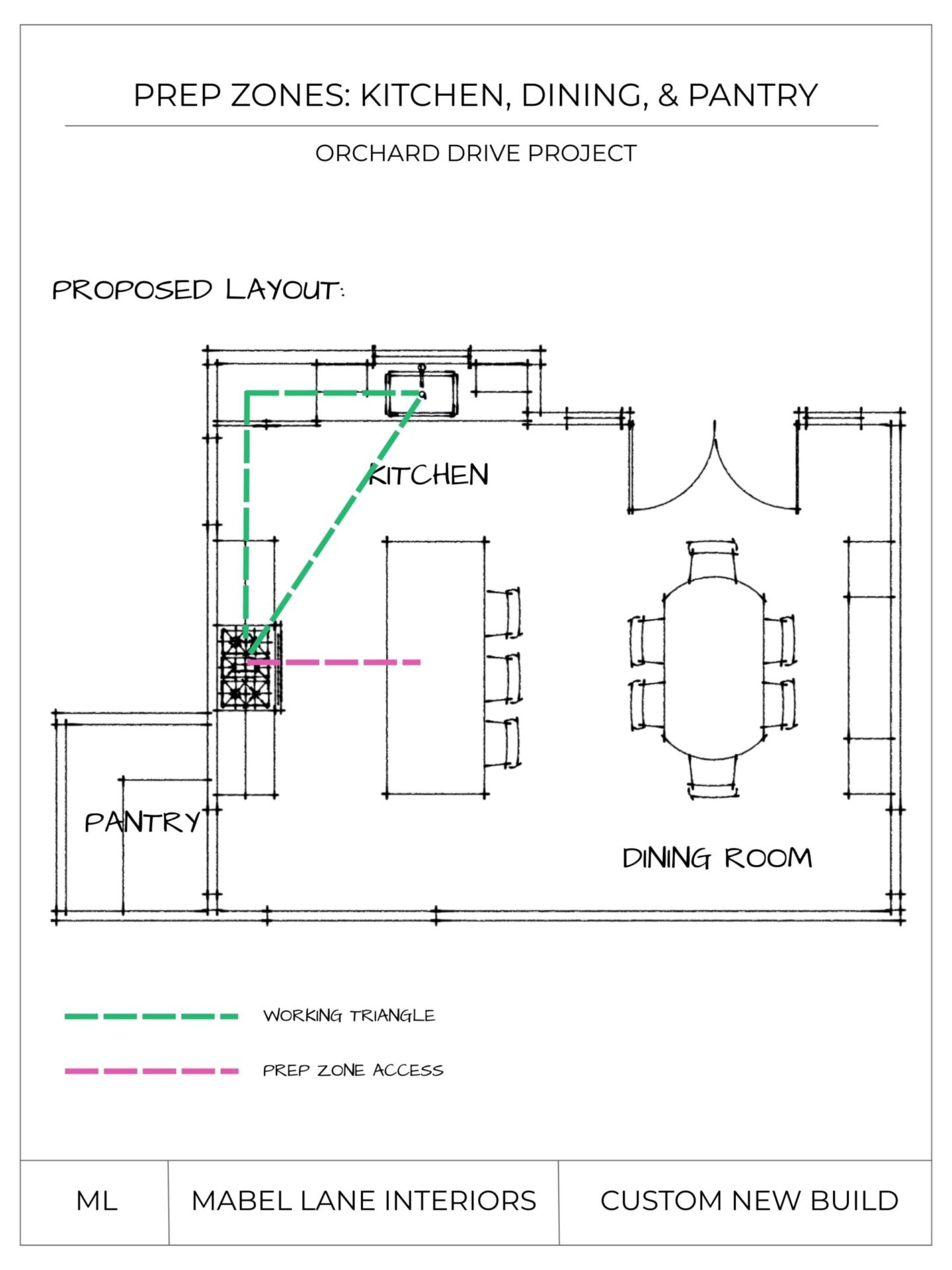
With the simple shift of moving the sink to the perimeter wall, the island will function as a true prep and gathering space with easier cleanup, less congestion around the sink, and greater ability for her children to gather and participate in cooking.
Maintaining the Working Triangle
The working triangle itself required only minor adjustment. The key relationships we prioritized were:
- Refrigerator to sink
- Prep surface to stove
- Clear movement to and from the prep surface
With prep circulation now moving around the working zone instead of through it, cooking will feel more contained and less likely to be interrupted.
Pantry as a Secondary Support Zone
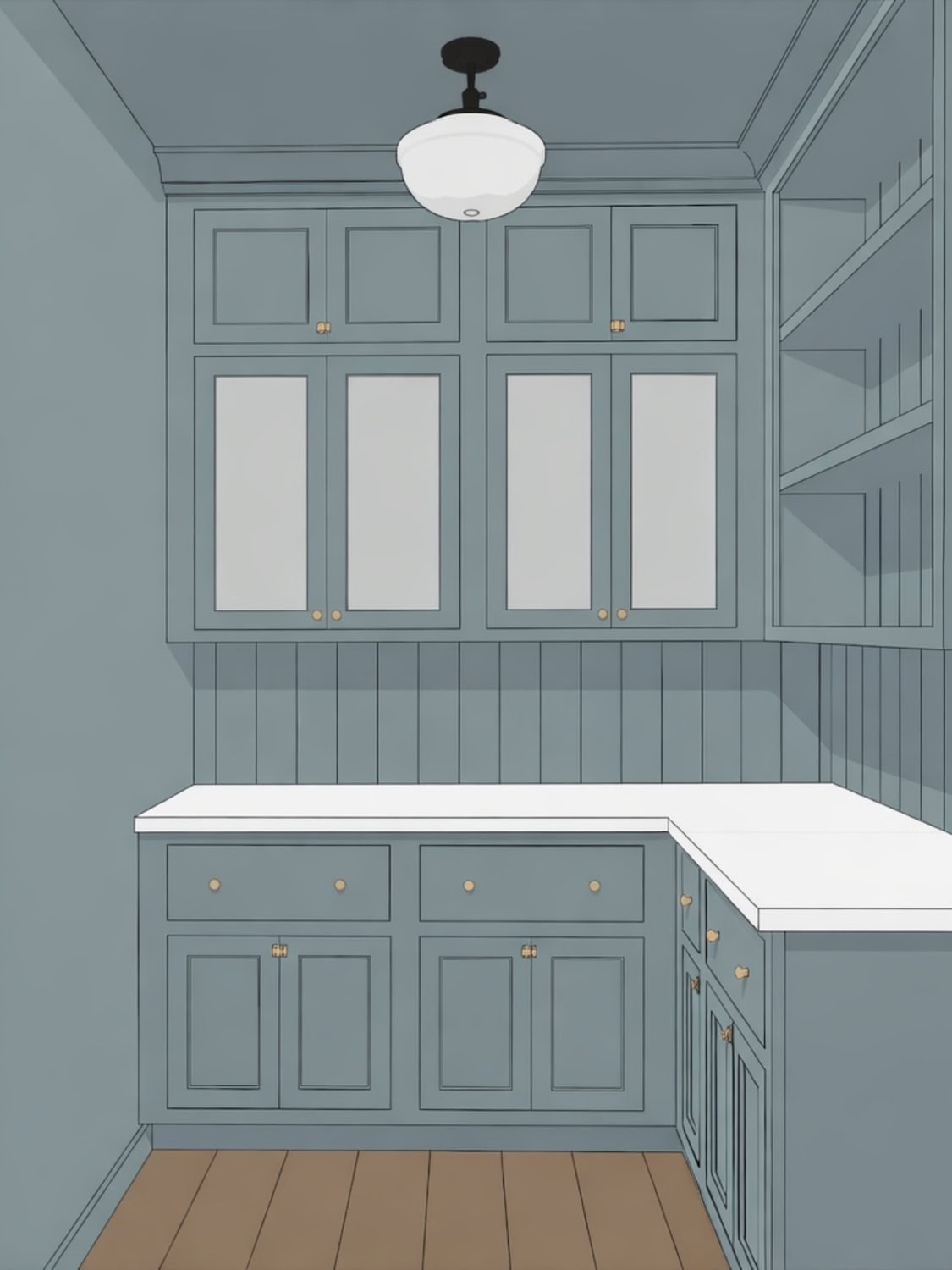
Next, we took a closer look at how our clients would naturally move between the pantry and the refrigerator. The pantry will serve as a secondary support zone with its own counter for small appliances and ample storage for dry goods. Now the flow through the kitchen looks like this:
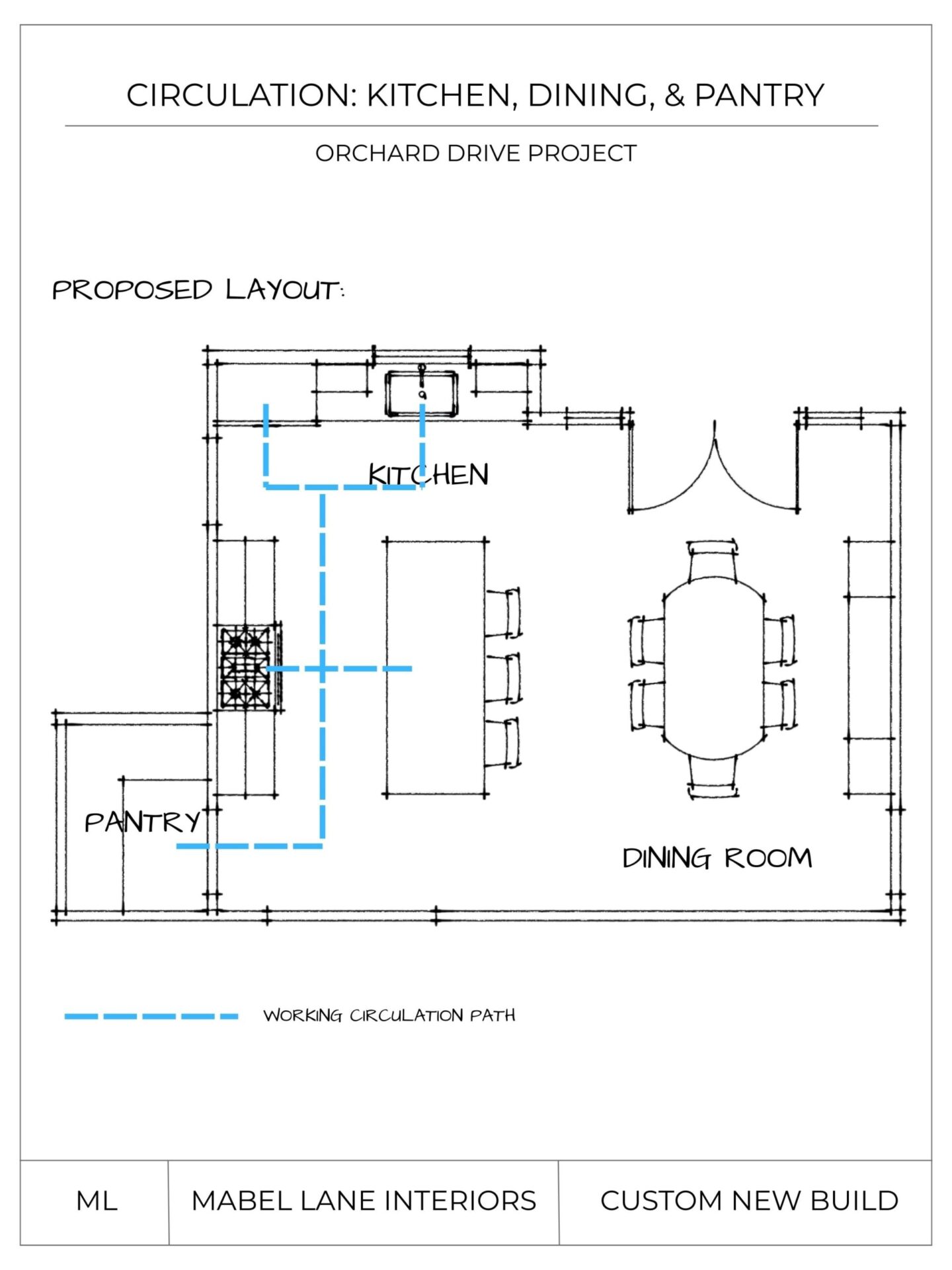
- Dry ingredients come out of the pantry and land on the island.
- Fresh ingredients go from the refrigerator to the sink, then over to the prep area.
- Prepping can happen without anyone needing to cross through the main working triangle.
- Cleanup shifts back to the perimeter, which helps keep the island open for gathering.
- The island can now do what it was meant to: host conversation, homework, and guests.
Kitchen to Dining Circulation
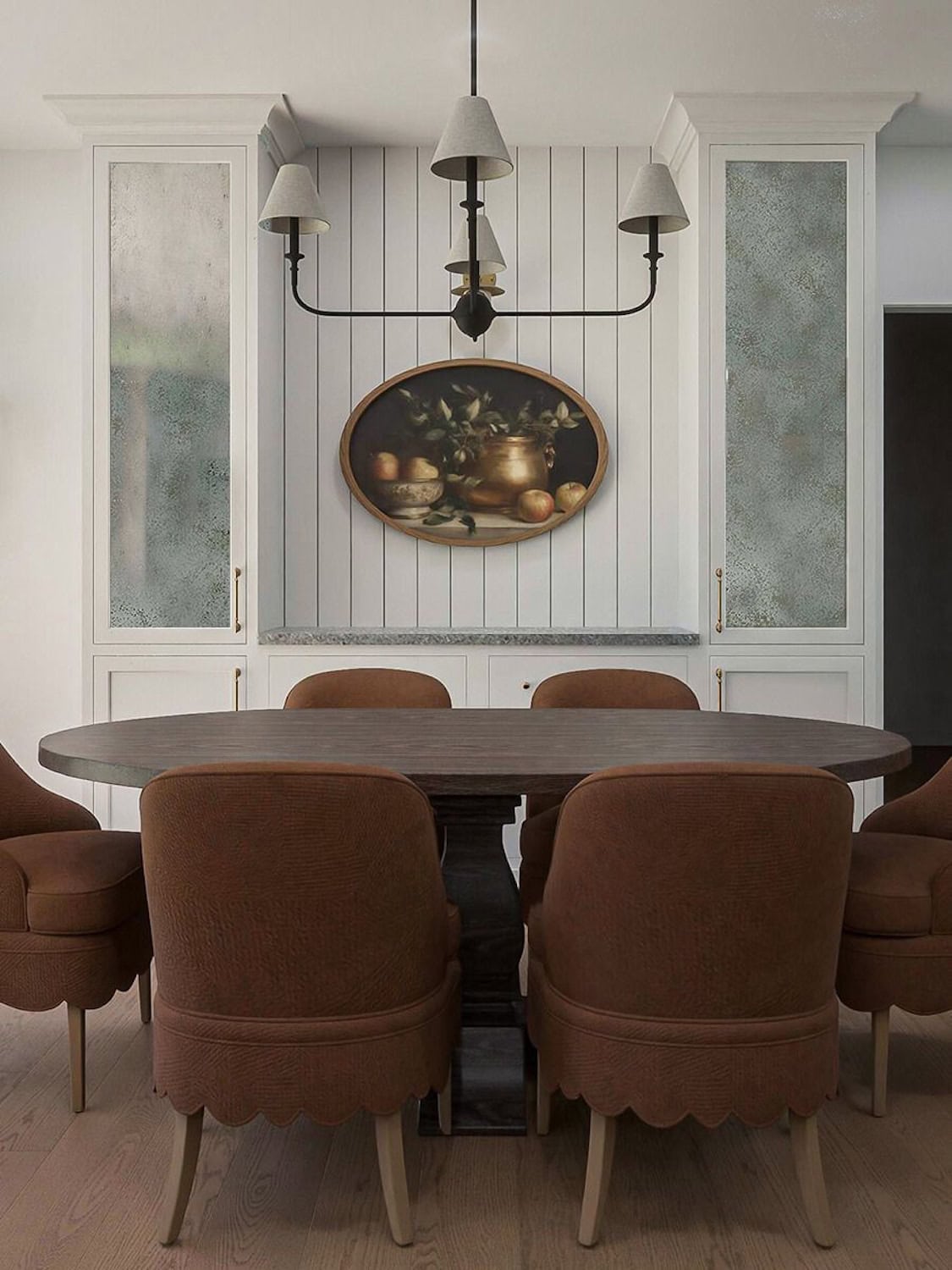
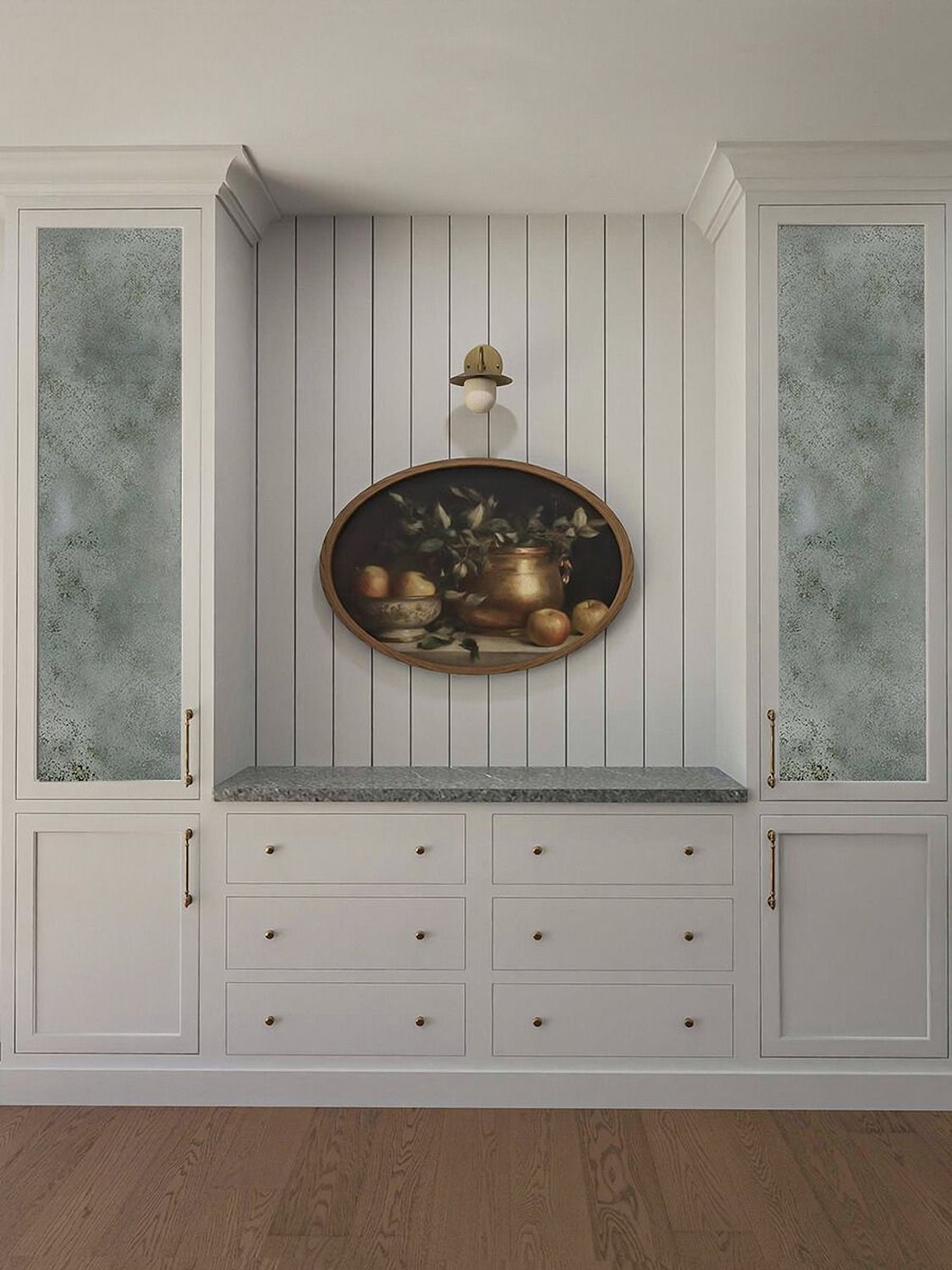
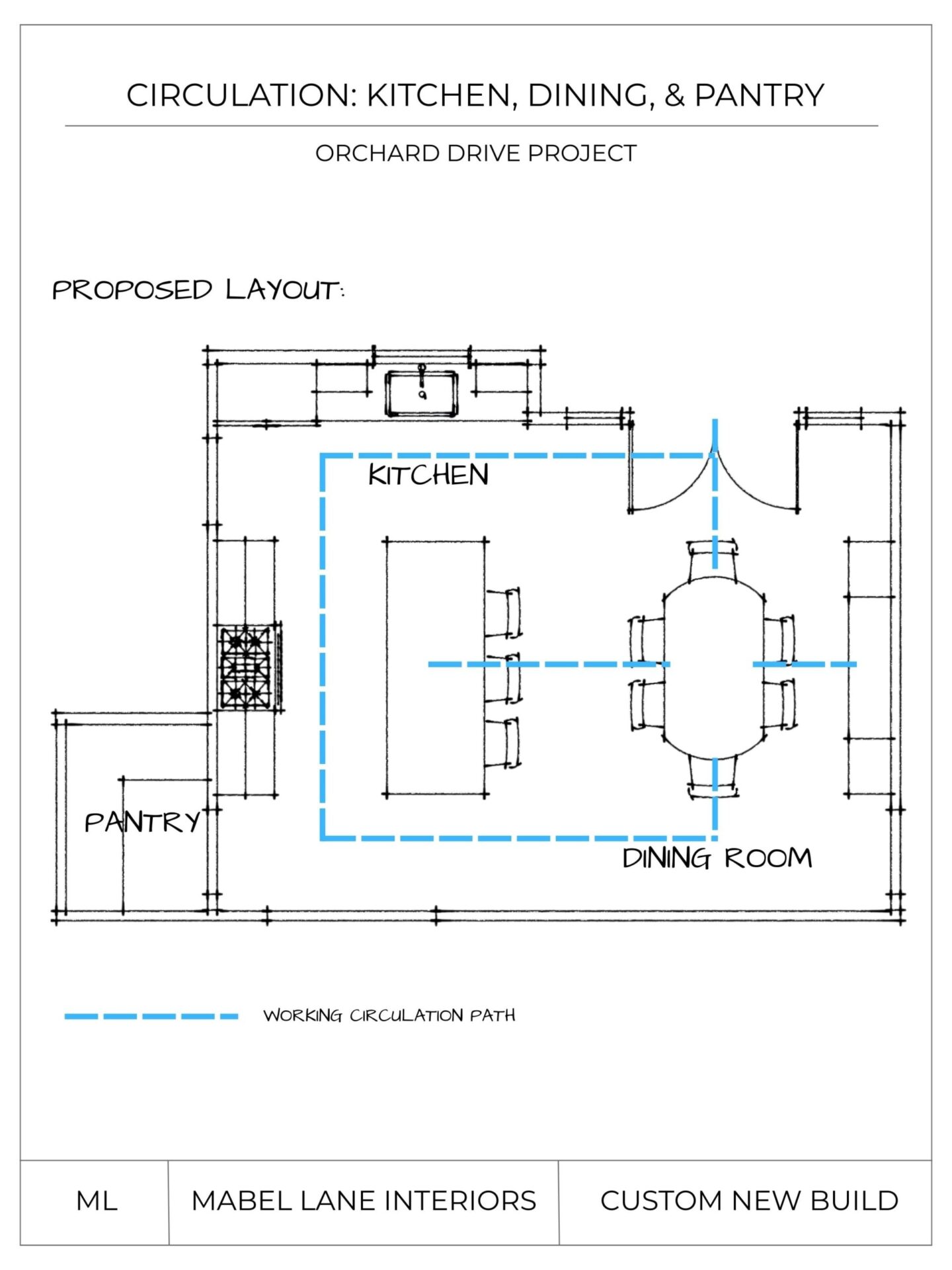
Overall, the connection between the kitchen and dining room hasn’t really changed. However, we designed a custom dining hutch for our clients to hold all their serveware and holiday table decor. Now, this proximity of dedicated storage will make it much easier for our clients to set the table and entertain.

About Mabel Lane
Mabel Lane is a residential design studio built on a foundation of livability and comfort. Grounded in a modern heritage sensibility, our work specializes in custom new-builds, renovations, and furnishings designed to feel quietly refined and deeply connected to everyday life.
Resources
Notes on Home
A weekly letter from our studio sharing reflections and design lessons on how to cultivate a home grounded in permanence, character, and warmth.