When it comes to interior design, it’s often the smallest adjustments that make a home feel comfortable in the long term. In reviewing plans for a new-build home in Denver, we found that the open-concept kitchen and dining room didn’t need any major rework. Instead, implementing just a few small adjustments would make these spaces work together more efficiently.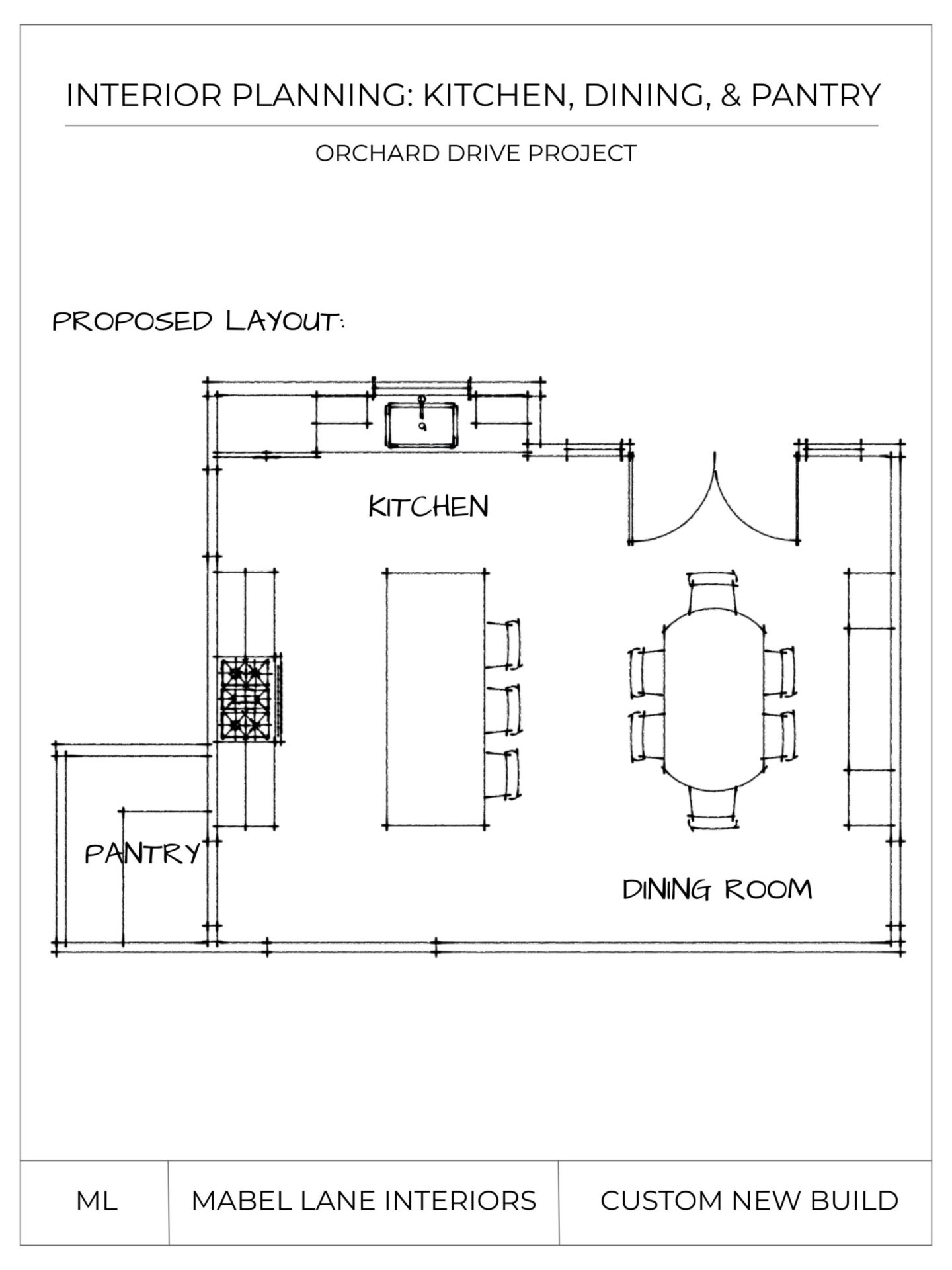
Designing for Daily Life
Cooking at home is a regular part of life for this family, and they want the kitchen island to be the primary spot for casual meals and prep space. Their kids often help out at both the island and the sink, and hosting friends is woven into how they use their kitchen and dining areas.
From early conversations, the family wanted:
- A clear island without a sink to maximize prep and gathering space
- Dedicated and hidden counter storage for coffee and beverages
- Plenty of storage for small appliances
- Ample space for storing entertaining serveware and holiday table décor
- A pantry that functions as an extension of the kitchen with both closed and open shelving
- Abundant natural light and ability to take in the surrounding views
Reviewing the Existing Kitchen, Dining, and Pantry Floor Plan
In large open-concept spaces, it is important to look beyond square footage and assess any wasted space. In our opinion, generous room sizes are meaningless if they aren’t designed to function well. Here, the rooms felt spacious, but some areas didn’t pull their weight – and the overall storage plan left a few gaps for what our clients needed.
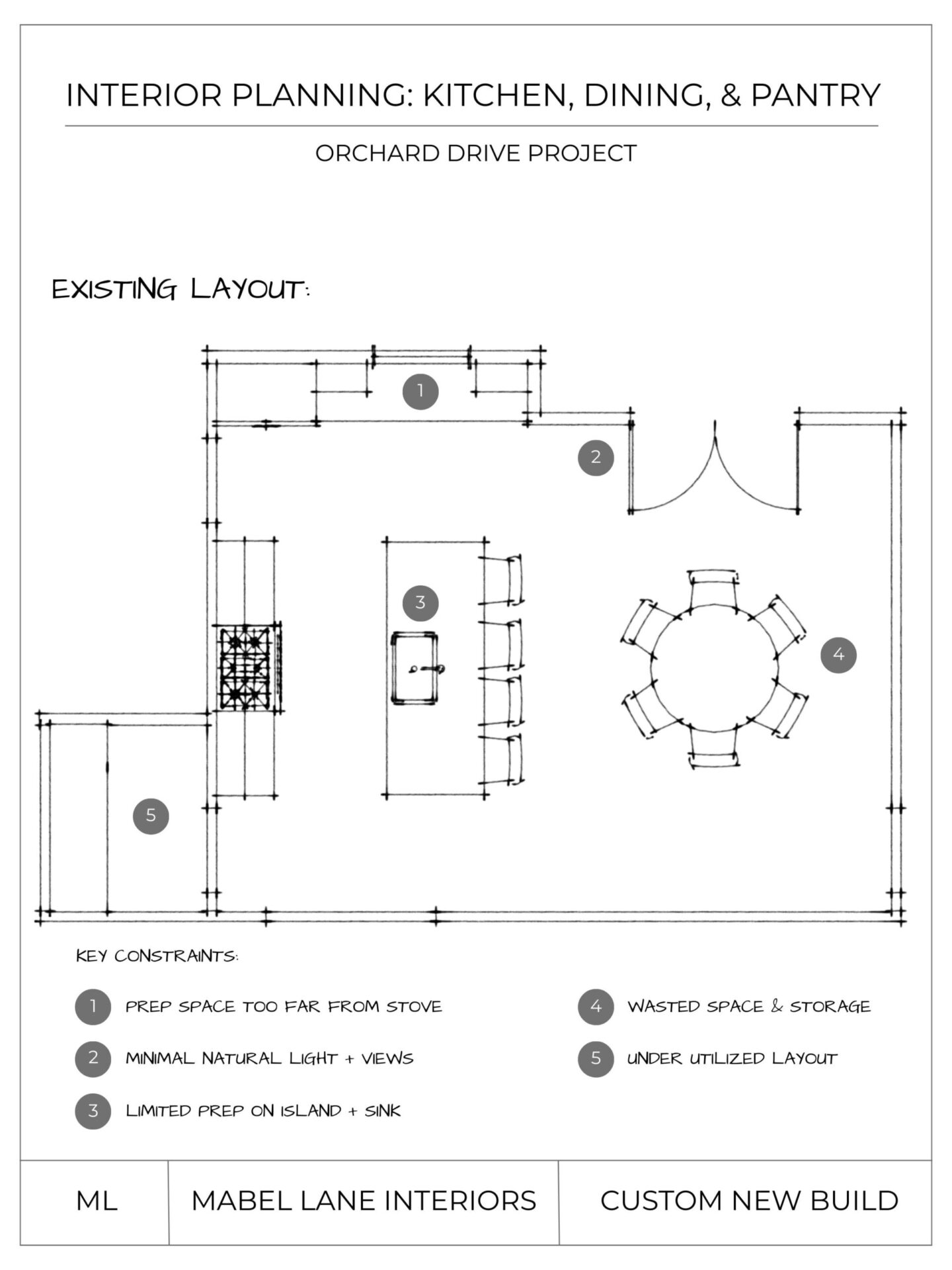
Fortunately, the existing layout provided good overall flow between the kitchen, dining room, and pantry. Circulation paths worked well, and there were no major relationship issues between spaces. We didn’t feel that making any structural changes would really create any advantage for this floor plan and that we could easily work within the given footprint.
However, a few opportunities for improvement did stand out:
- The largest prep space is too far from the stove and pantry
- Natural light and views could be better emphasized
- The island is occupied by the sink, limiting the way the family wants to utilize this part of the kitchen
- The dining room is oversized and expansive with no storage systems built into place
- The pantry layout is underutilized and lacks efficient storage solutions
Our Proposed Planning Moves
Once we understood how the family wanted to move through this part of the house, our attention shifted to the adjustments that would make each area work a little harder.
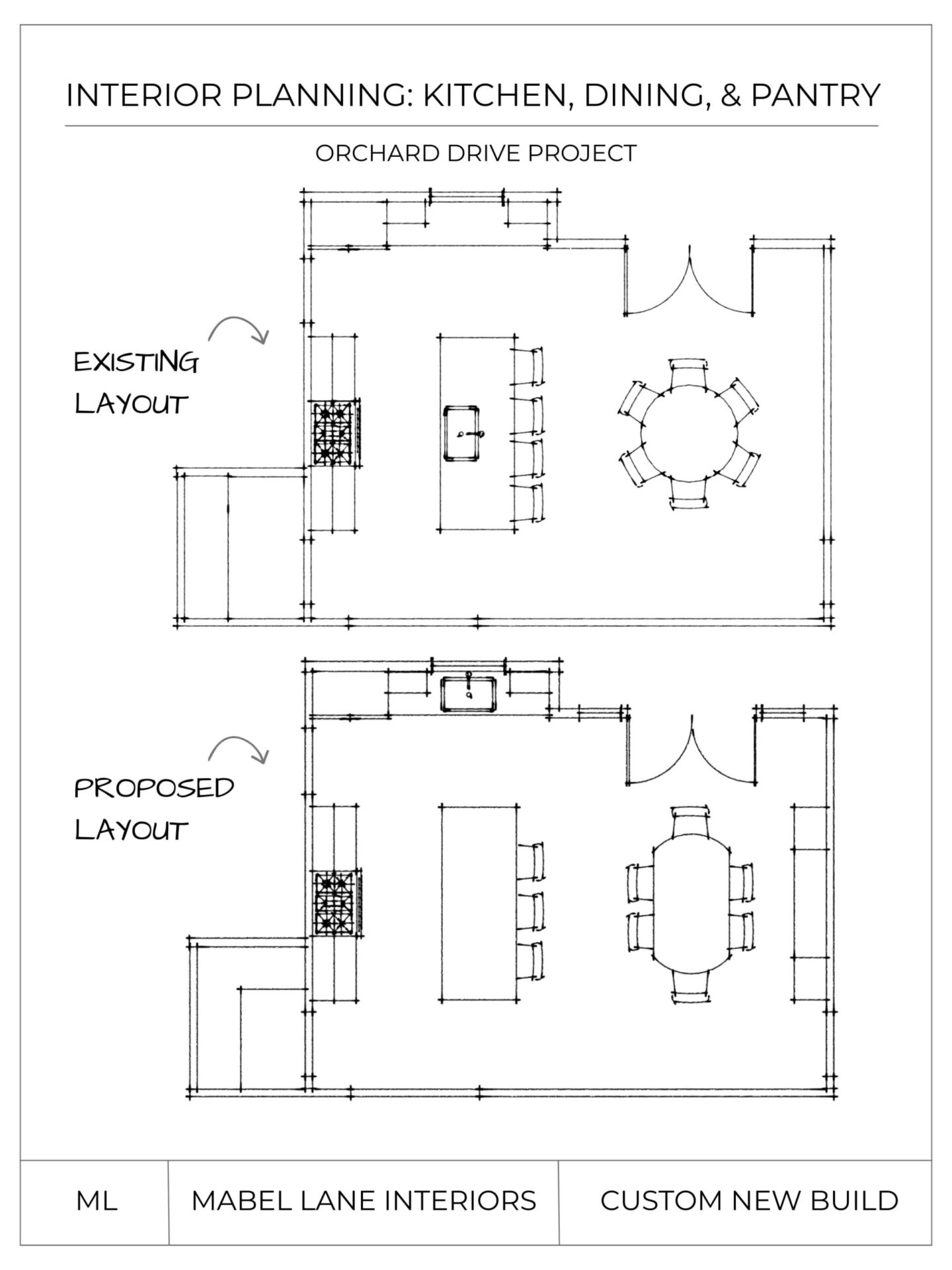
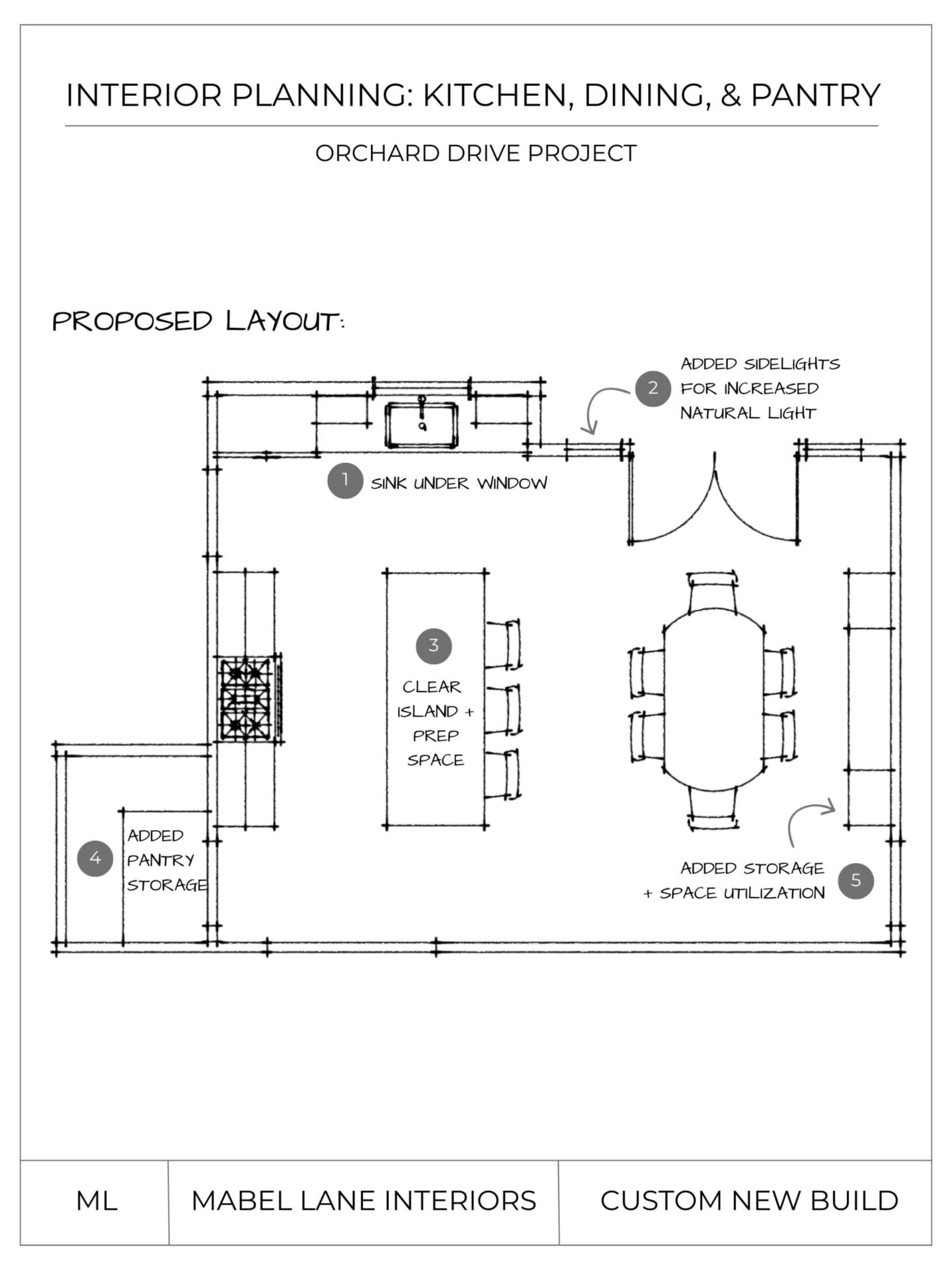
1. We started by moving the kitchen sink off the island and over to the perimeter wall, placing it right under a large window. This simple shift lets the island become a true prep and gathering spot, and it also means the sink now benefits from natural light and a view outside
2. With the sink relocated, the island stays open and spacious, allowing plenty of room for people to move around and work together.
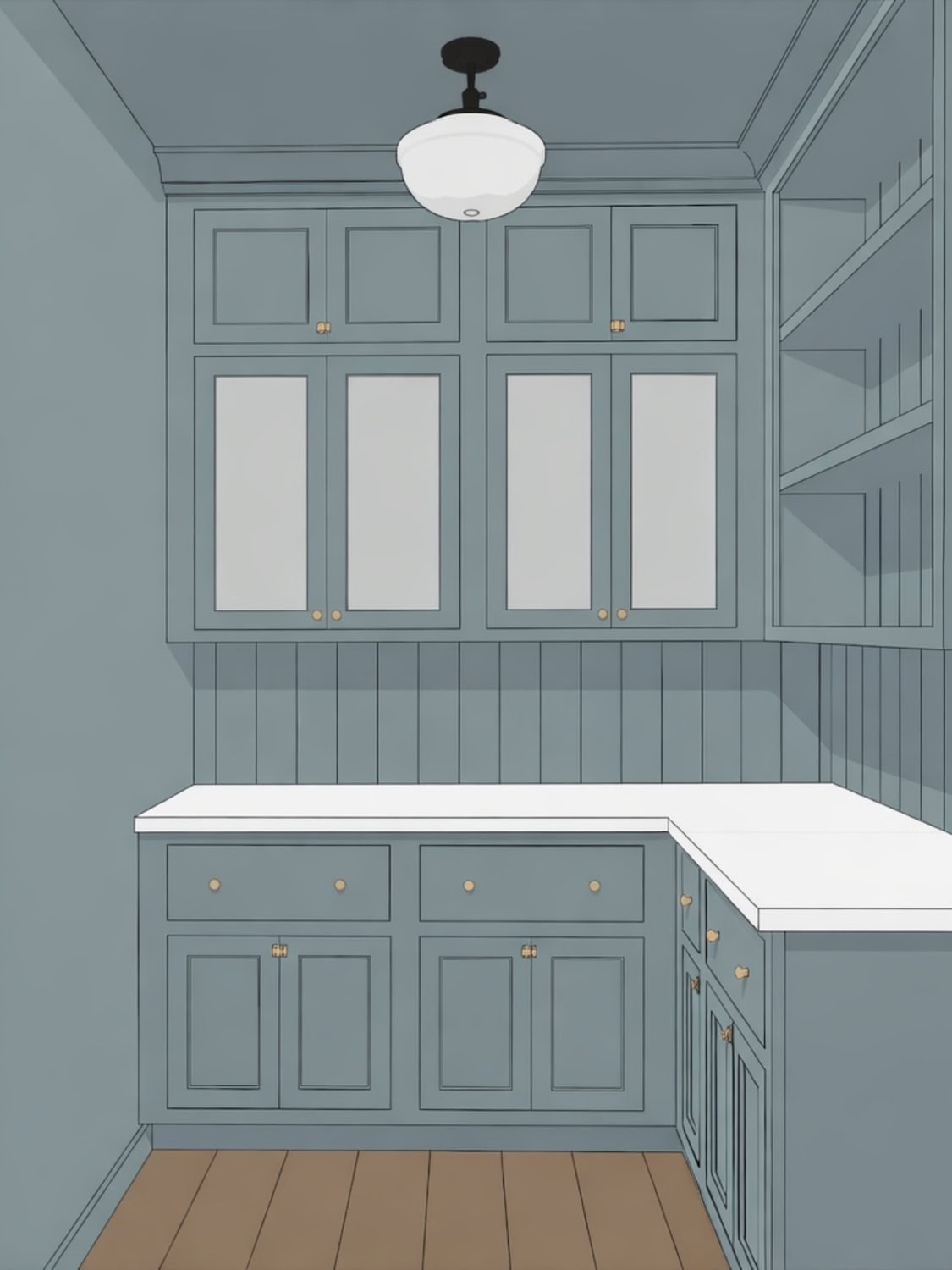
3. We also adjusted the pantry layout just enough to add more storage and some open shelving along one wall. The idea was to let the pantry function almost like a secondary kitchen with room for appliances, coffee and beverage supplies, and all the everyday items that might otherwise crowd the main kitchen.
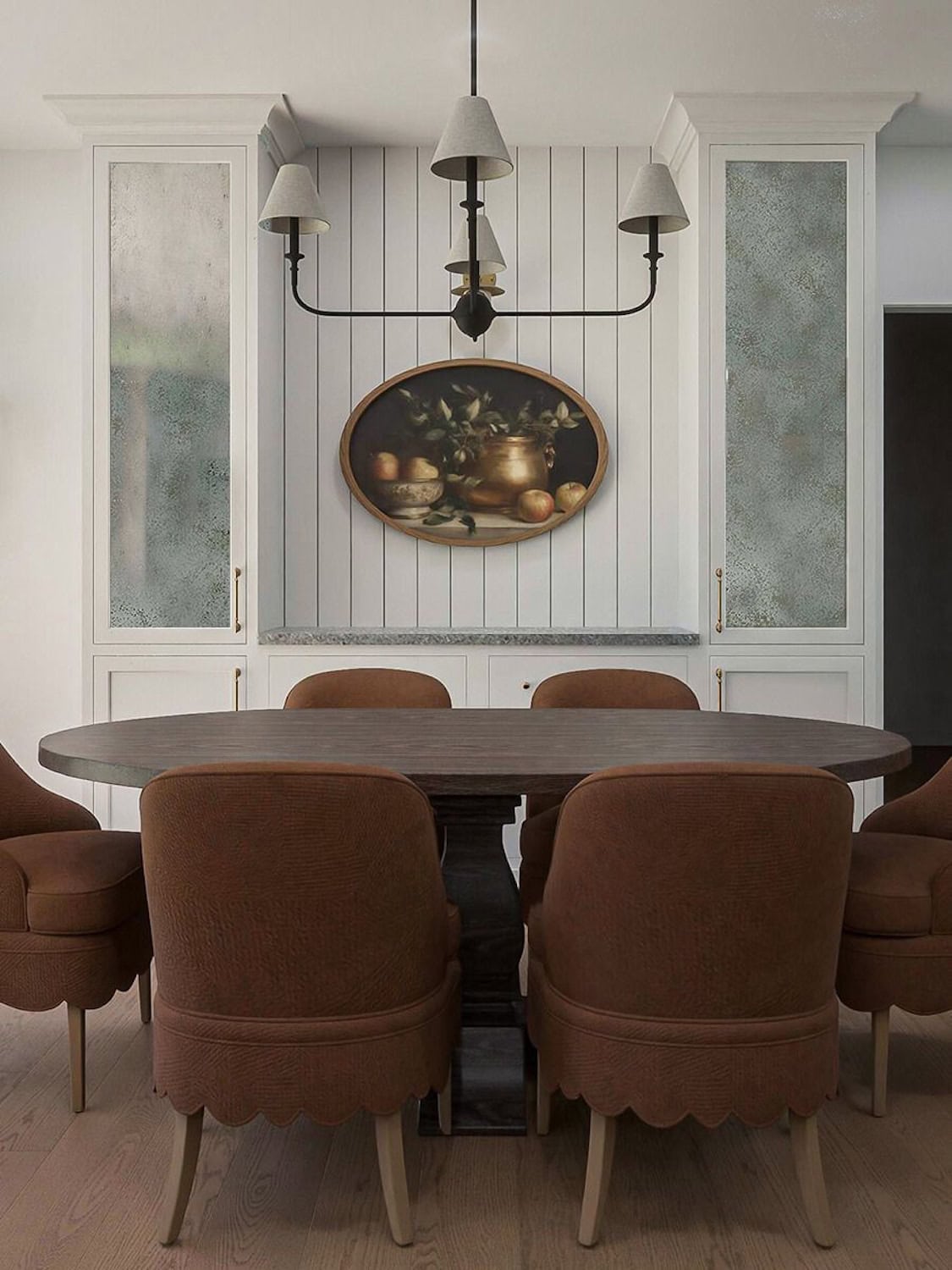
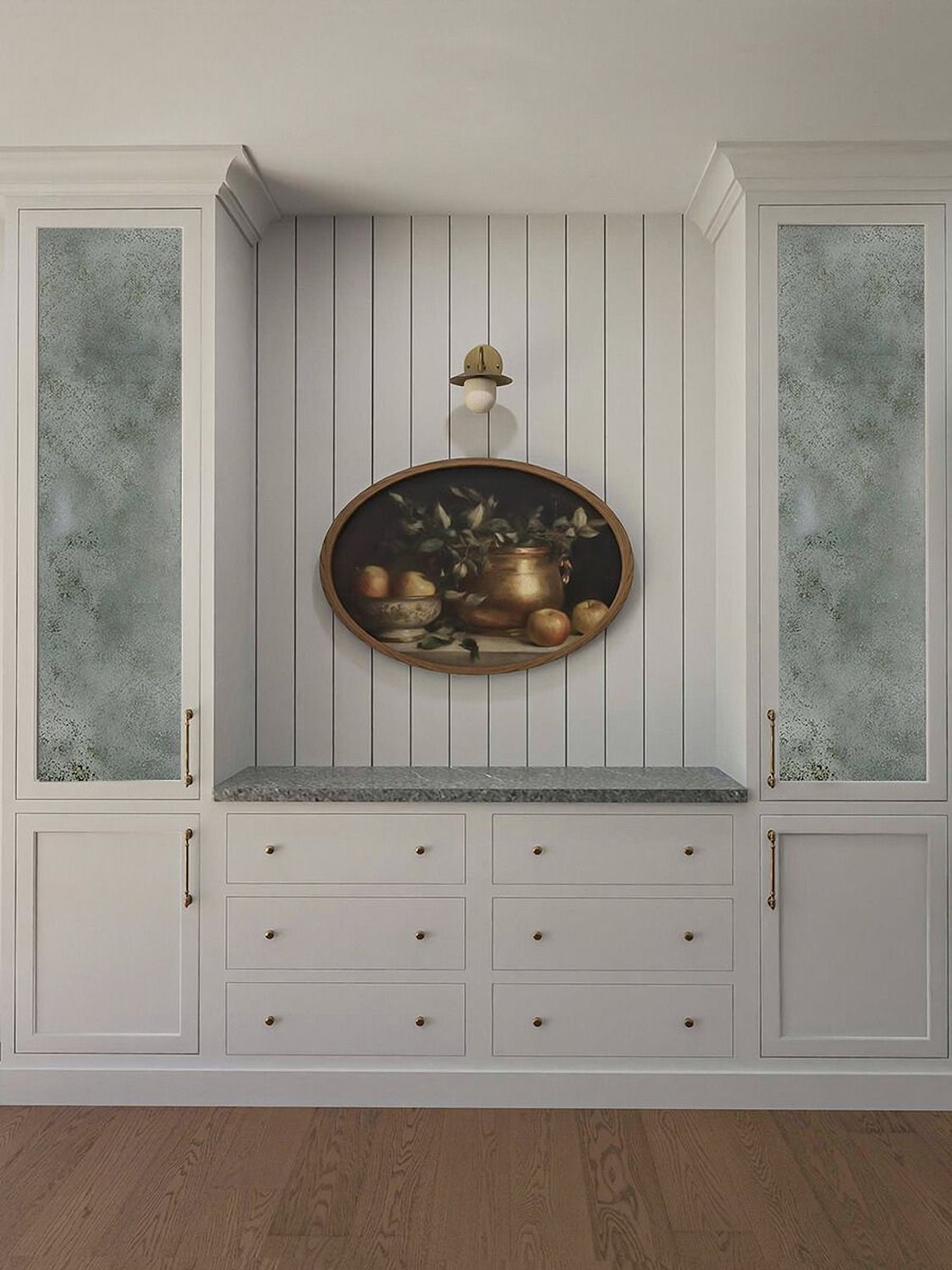
4. For the dining room, we designed a custom built-in hutch, giving serveware, platters, and holiday pieces a proper home. Not only does it make better use of the open wall space, but it also gives the room a sense of purpose.
5. We also added windows beside the French doors, bringing in more natural light and making the connection to the outdoors feel stronger.
The Early Results of Interior Planning
With these changes, the space will actually work harder for the family. The kitchen now has clear areas for prepping, washing, cooking, and serving, while the pantry handles overflow, and the dining room has storage that fits the way the family entertains. Altogether, each zone supports both daily routines and gatherings without missing a beat
This open-concept kitchen and dining room is just one piece of the Orchard Drive Project series. You can read more about the early planning stages and behind-the-scenes details for this custom new build home in the posts linked below.

About Mabel Lane
Mabel Lane is a residential design studio built on a foundation of livability and comfort. Grounded in a modern heritage sensibility, our work specializes in custom new-builds, renovations, and furnishings designed to feel quietly refined and deeply connected to everyday life.
Resources
Notes on Home
A weekly letter from our studio sharing reflections and design lessons on how to cultivate a home grounded in permanence, character, and warmth.