Finding the right dining table can be surprisingly tricky when you’re balancing seating needs with room proportions – and because it’s a piece of furniture your family will likely use every day, it’s worth getting those details right. This step-by-step guide walks you through the practical considerations of choosing a dining table, from determining the right size and shape to ensuring you have enough room for everyone to gather comfortably.
Determine Your Dining Table Size & Seating Needs
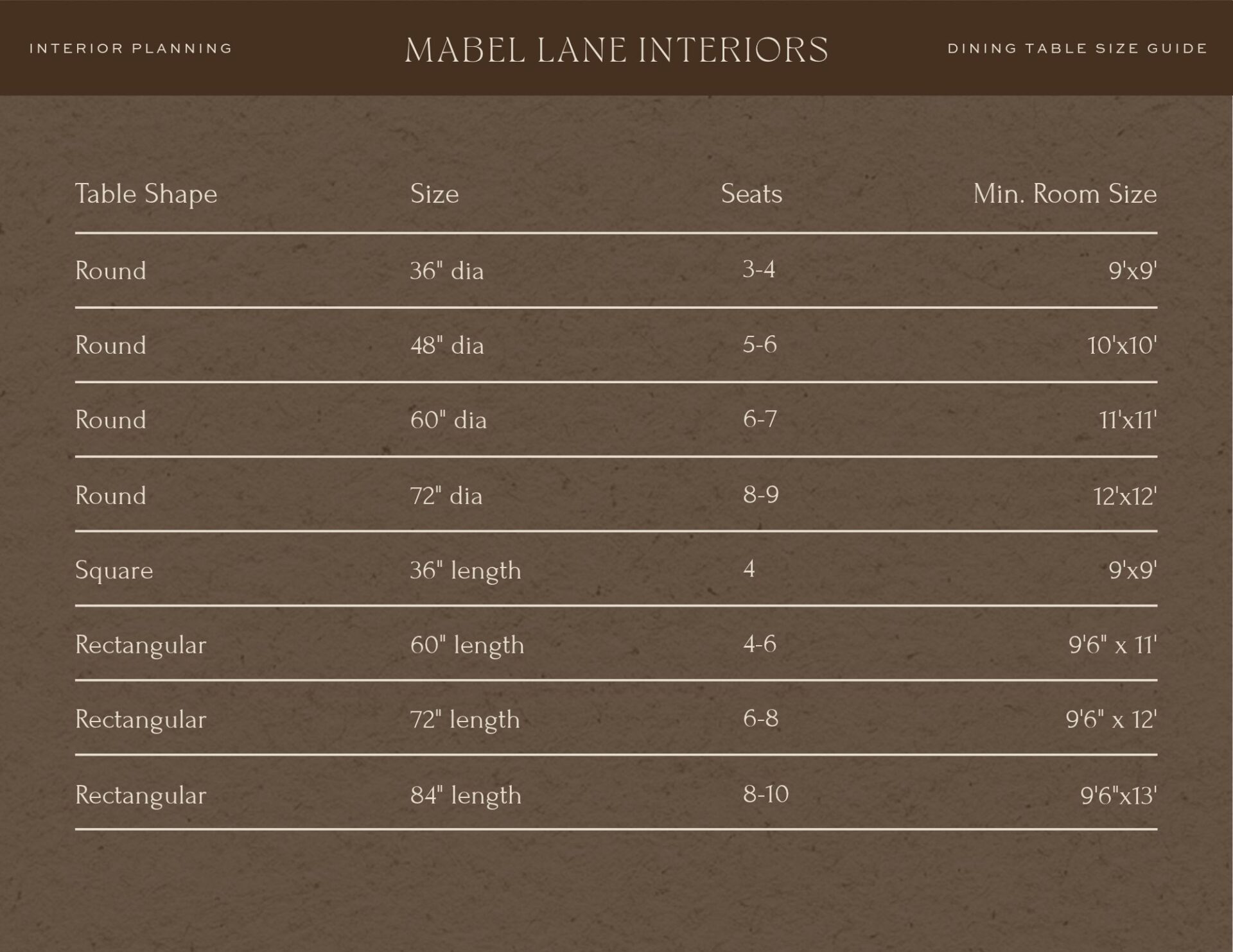
Knowing how many people you need to seat is a natural place to start as it narrows down which dining table sizes will work for your home. Round dining tables are measured by their diameter, with the most common sizes including 36, 48, 60, and 72 inches. Standard rectangular tables typically range from 60 to 84 inches long and average 36 to 42 inches wide, with many extending to 96 inches. The chart below shows how many guests each table size can comfortably accommodate.
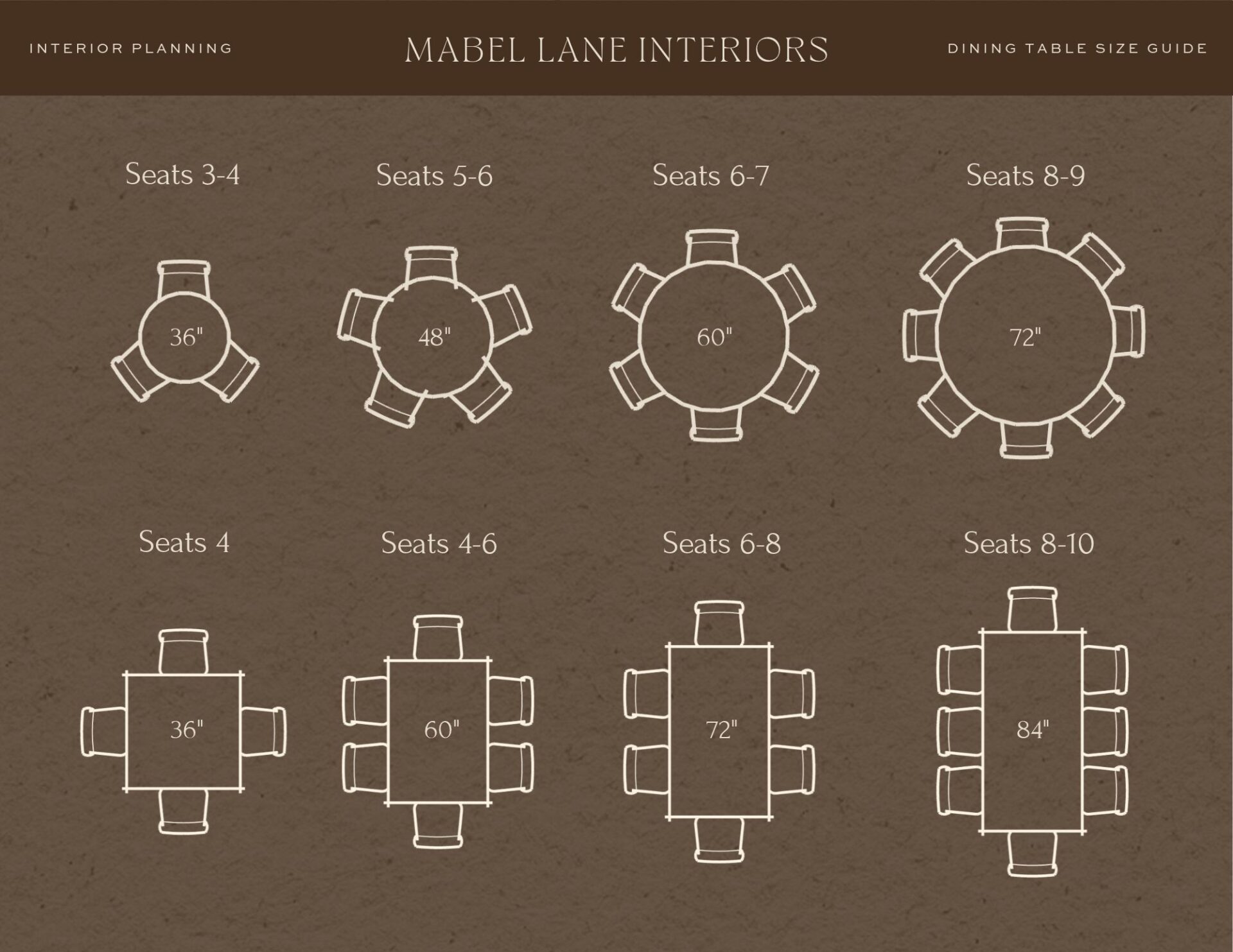
While this chart provides a helpful starting point when choosing the right dining table size, another detail worth considering is the table’s base. For example, pedestal and trestle bases offer greater seating flexibility, whereas tables with corner legs may restrict legroom and limit actual seating capacity. When in doubt, a great rule of thumb is to plan for at least 24″ of table-edge space per person – no matter the size, shape, or style of table.
Check Your Dining Table Clearances
Once you have an idea of the table size you need, the next step is making sure there is enough room to comfortably pull out chairs and move around the table. As a general rule, allow at least 36 inches between the table’s edge and surrounding walls and furniture – or even better, 42 inches if space allows. The chart below shows the minimum room dimensions needed to accommodate dining table sizes with 36 inches of clearance on all sides.
Where guests need to walk behind occupied chairs or access nearby cabinetry, plan for 42 to 48 inches – and don’t forget to account for doorways, built-ins, or additional accessibility needs. If clearances feel too tight, revisit the table size as a slightly different configuration may give you the space you need to keep the dining area functional.
Choose the Right Dining Table Shape
With your seating needs and clearance requirements established, the next consideration is how the table’s shape works with the proportions of your room. Round tables work well in square dining rooms or breakfast nooks, while rectangular tables suit longer spaces. Why does this matter? Two tables that seat the same number of people but are different shapes take up space very differently.
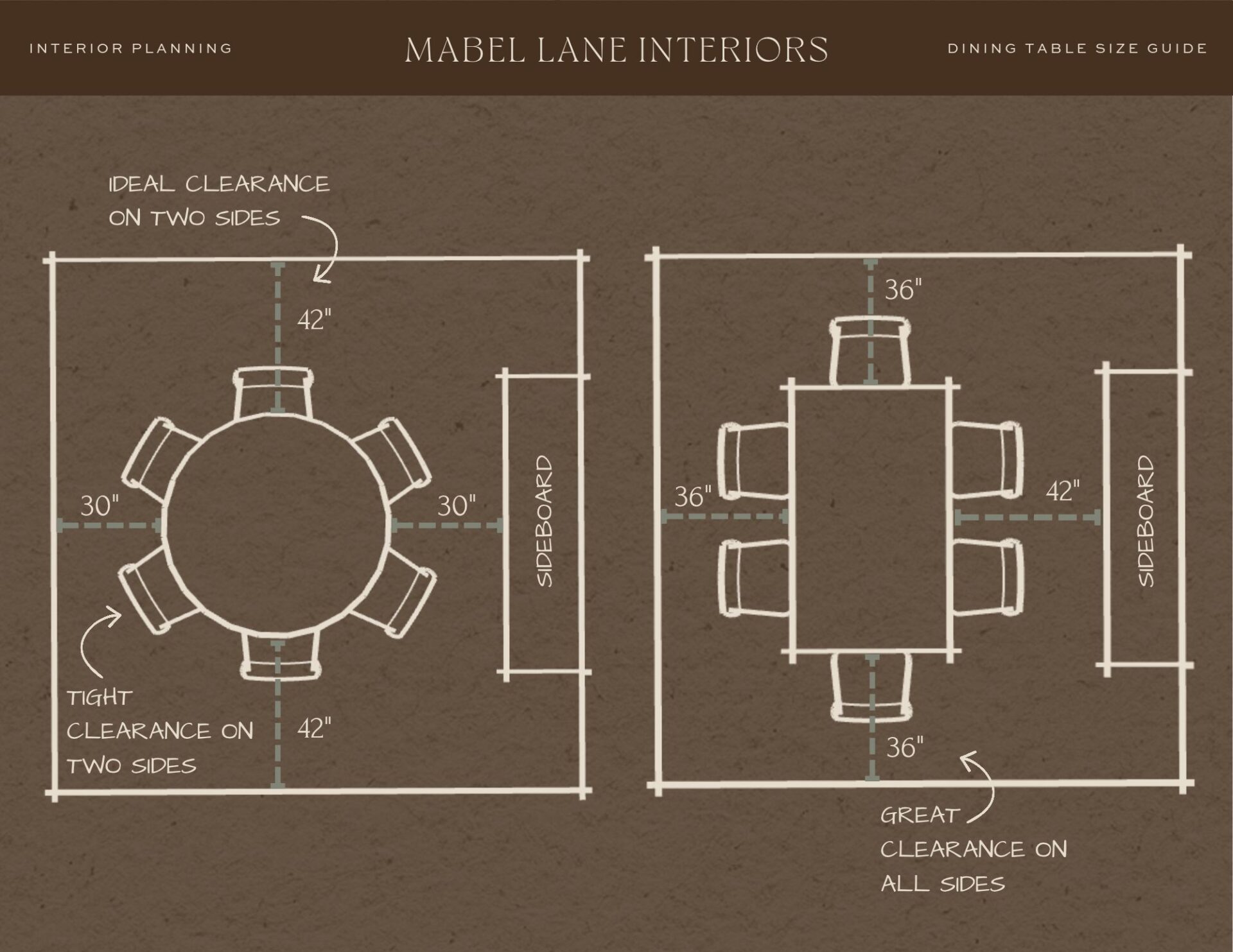
Choosing the right shape maximizes functionality by leaving more room for chairs, circulation, and access to additional furniture. You can see a great example of this in an open-concept kitchen and dining room where changing the table’s shape improved the room’s layout and circulation.
More Interior Planning Guidance
If you found this guide helpful, we hope you will enjoy exploring our Home Styling Guide, where we’ve gathered more practical measurements and illustrated design tips to help you make confident design decisions throughout your home.

About Mabel Lane
Mabel Lane is a residential design studio grounded in a modern heritage sensibility. Our work specializes in new-builds, renovations, and furnishing projects designed to feel quietly refined and deeply connected to everyday life.
Resources

Notes on Home
A weekly letter from my desk exploring the principles and details behind creating a well-designed home - no degree required.